Capability 01
Die casting
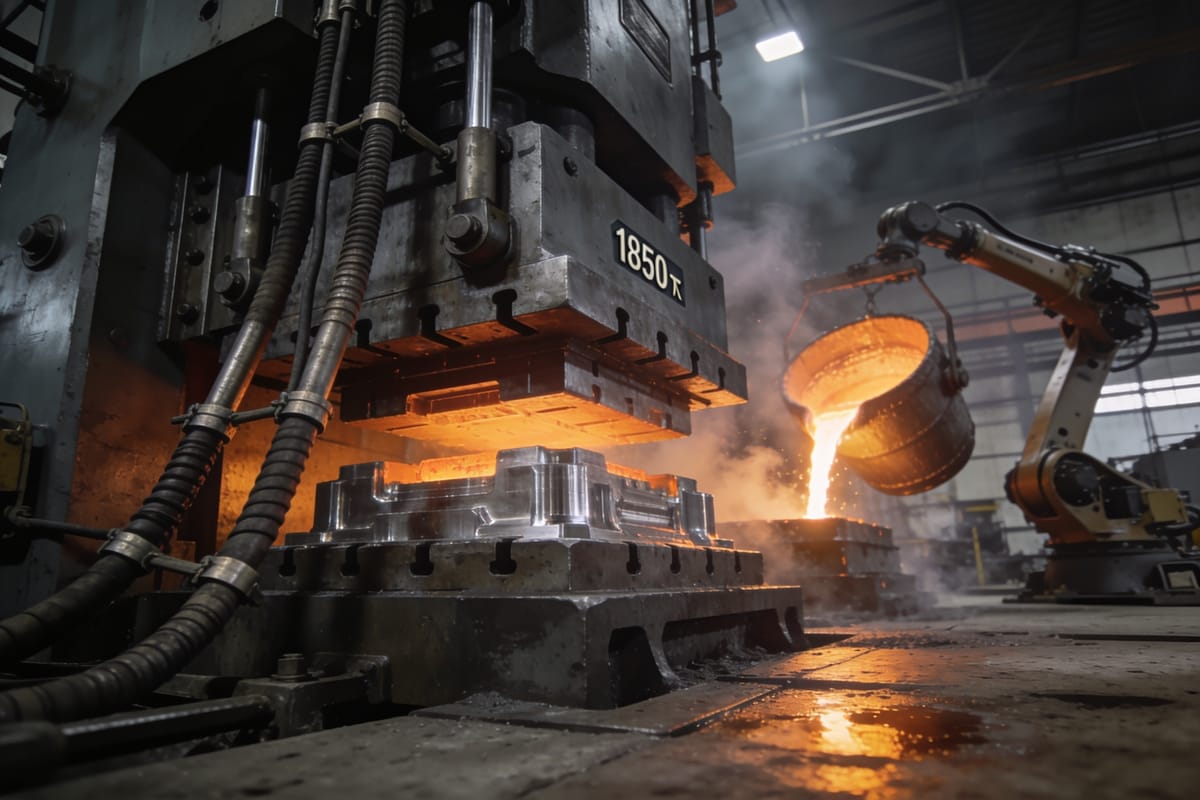
The foundry machine park allows us to produce parts from 5 grams up to around 25 kilos. Clamping forces range from 320 to 1,850 tonnes. All casting cells are robot-tended, which secures high productivity, flexibility and quality.
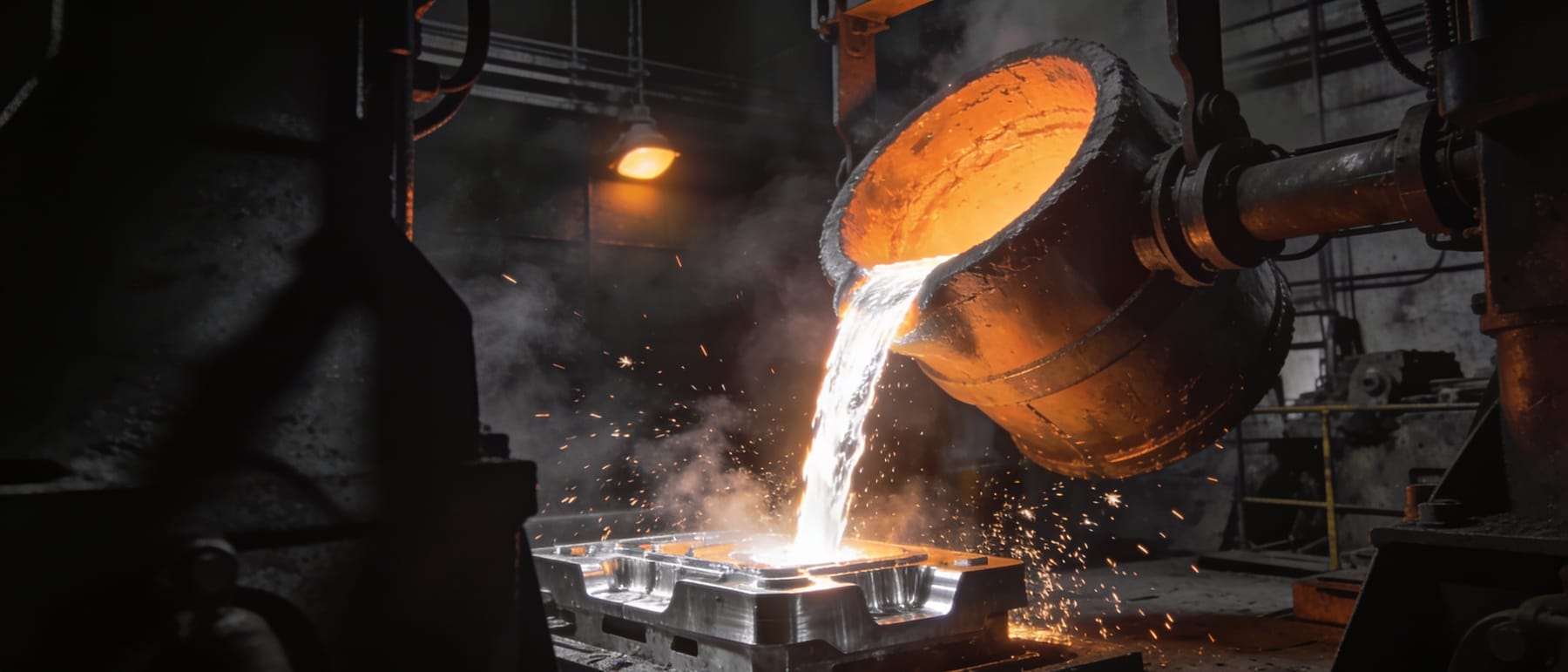
Aluminium die casting gives thin walls, high dimensional accuracy and a surface that can often be used as-cast. That makes it hard to beat when volumes justify the tool and the geometry is complex — a cast housing routinely replaces five to ten machined and joined parts.
Robot tending means every cycle looks the same: the same dose, the same spray, the same extraction time. That repeatability is what lets us hold tolerances series after series, year after year.
We cast in recycled aluminium alloy. Beyond the environmental gain, the recycled alloy gives a more even and predictable melt than many primary alloys.
Capacity
- Clamping force
- 320 / 450 / 650 / 700 / 1,100 / 1,850 tonnes
- Part weight
- 5 g – approx. 25 kg
- Casting cells
- 6, all robot-tended
- Material
- Recycled aluminium alloys
- Series
- From hundreds to hundreds of thousands per year

What is included
- DFM review of the cast geometry before the tool is ordered
- Tool procurement, tool maintenance and tool transfer
- Sample castings and a documented first article
- Series production with a call-off plan
- Deburring, blasting and downstream machining in-house
Plants
Where we cast
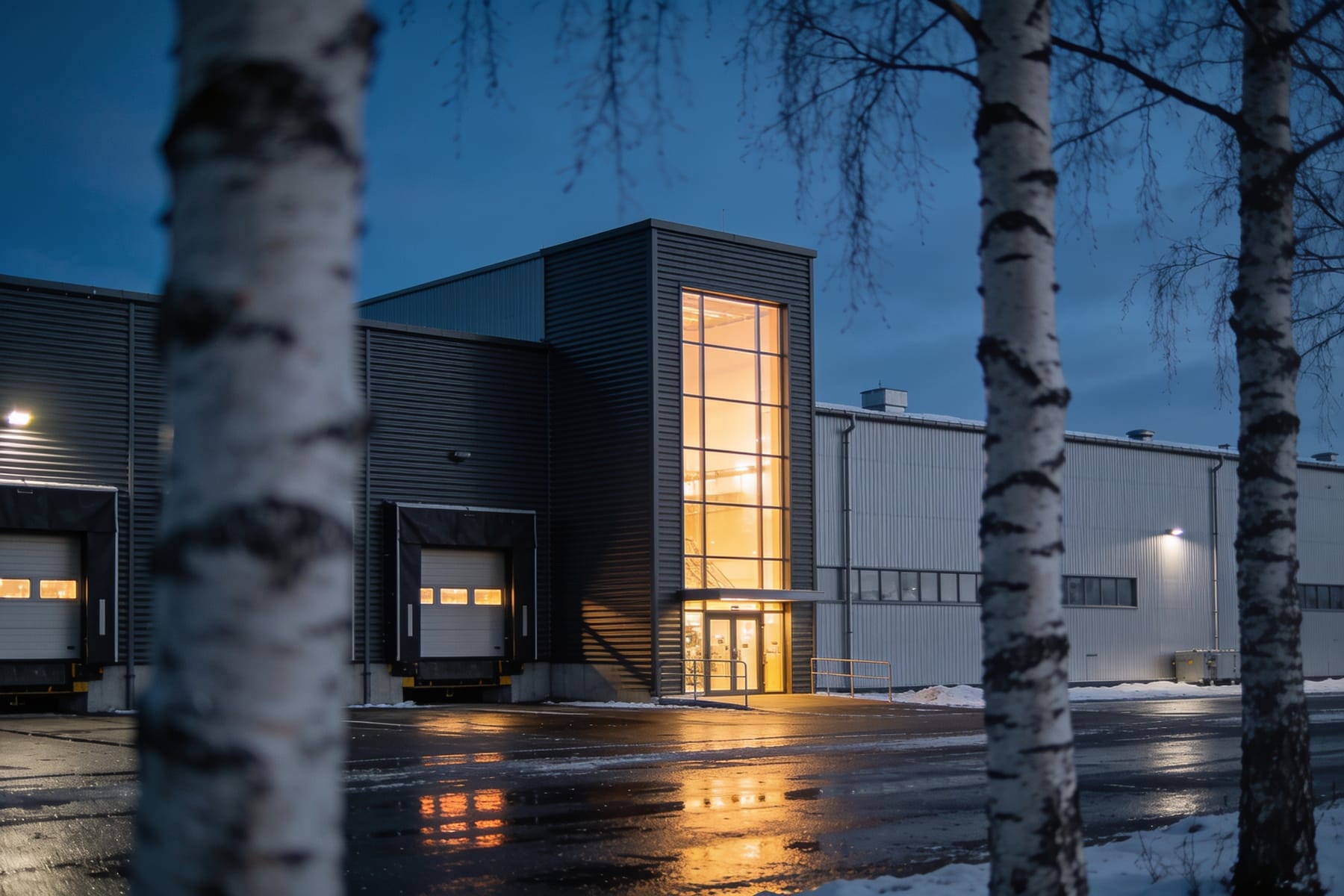
Die casting takes place in Sölvesborg, where casting cells, machining and the metrology room sit in the same building.
Industries
Related industries
Medical technology
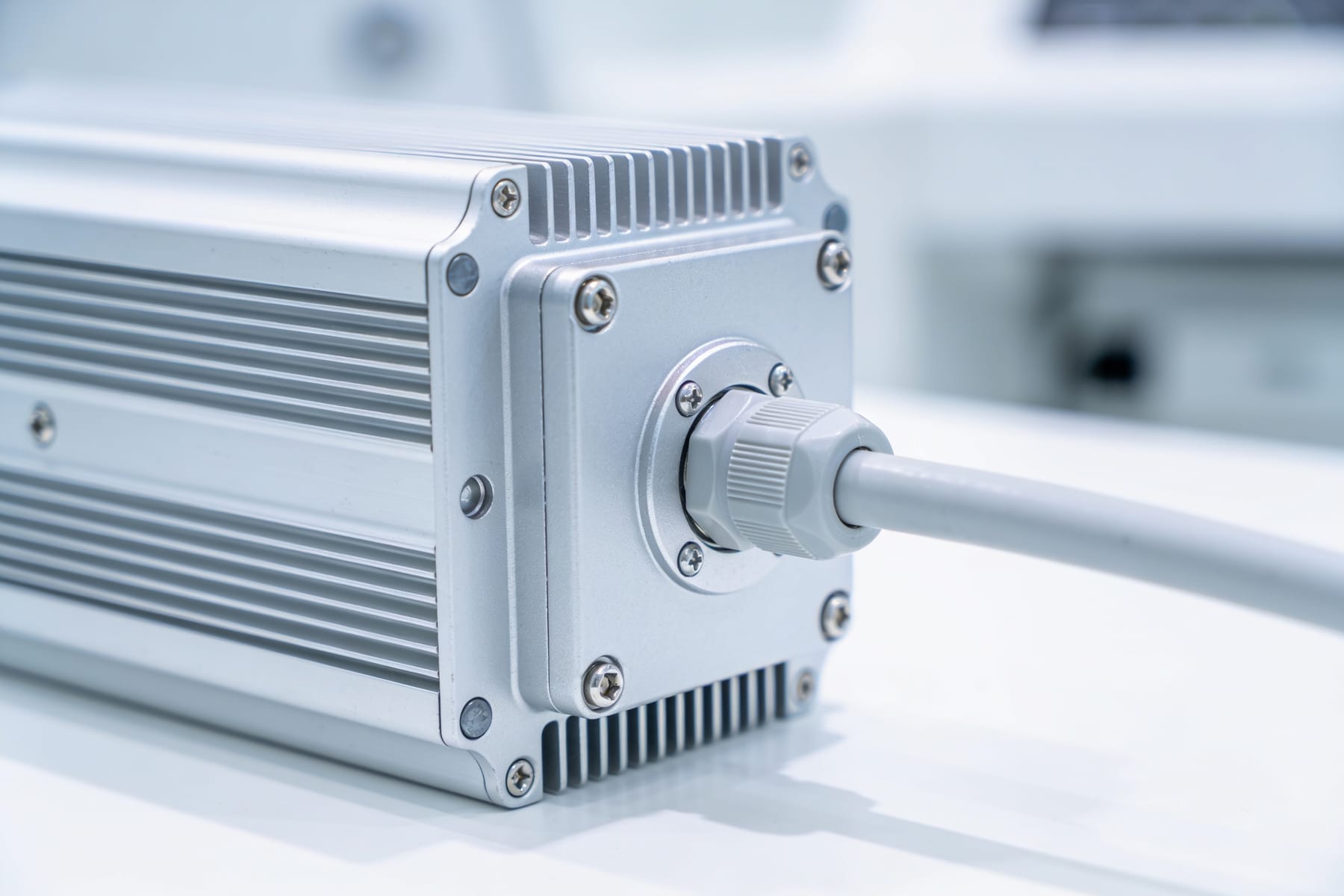
Enclosures, chassis and load-bearing structures for medical equipment, where the documentation matters as much as the part.
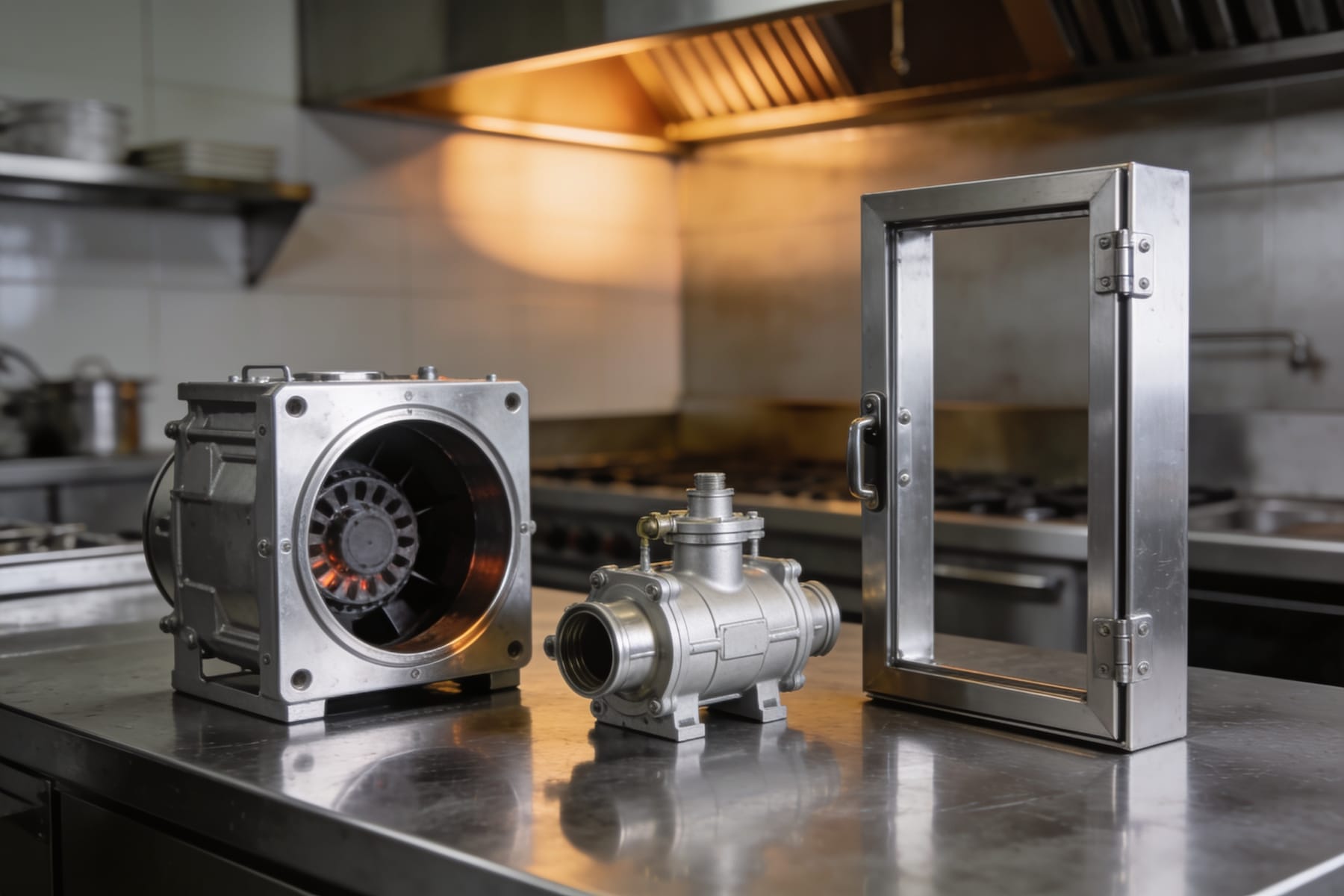
Professional foodservice
Components for manufacturers of professional kitchen equipment, where parts must survive heat, grease and daily cleaning for decades.
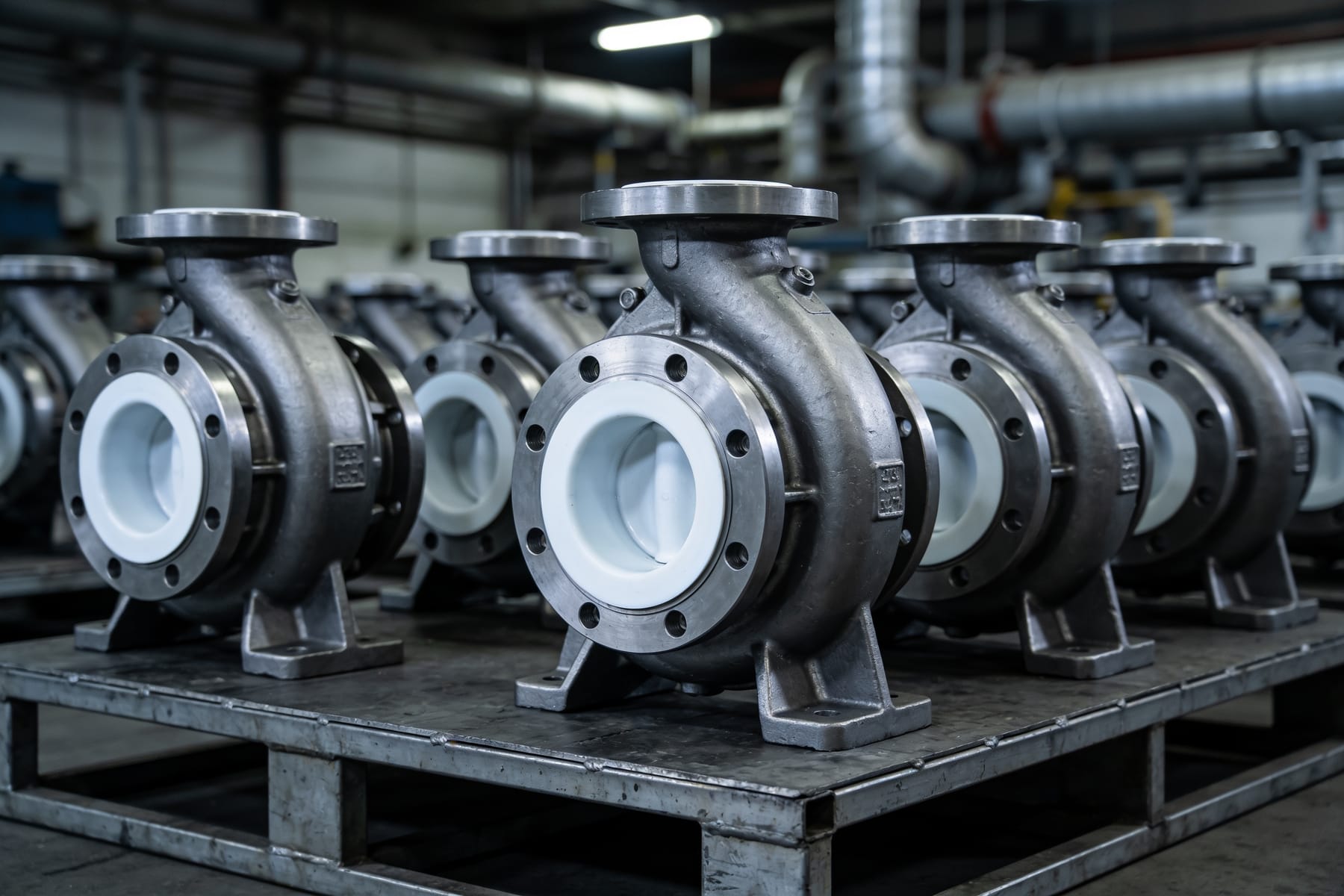
Industry & process
Housings, covers and load-bearing components for pumps, valves and process equipment — where tightness and accuracy decide.
Next step
Got a drawing?
Send it over. You will get a technical assessment and an indicative price from someone who will actually make the part — not from a sales organisation.
We accept STEP, IGES, 3D models and 2D drawings. Confidentiality goes without saying.